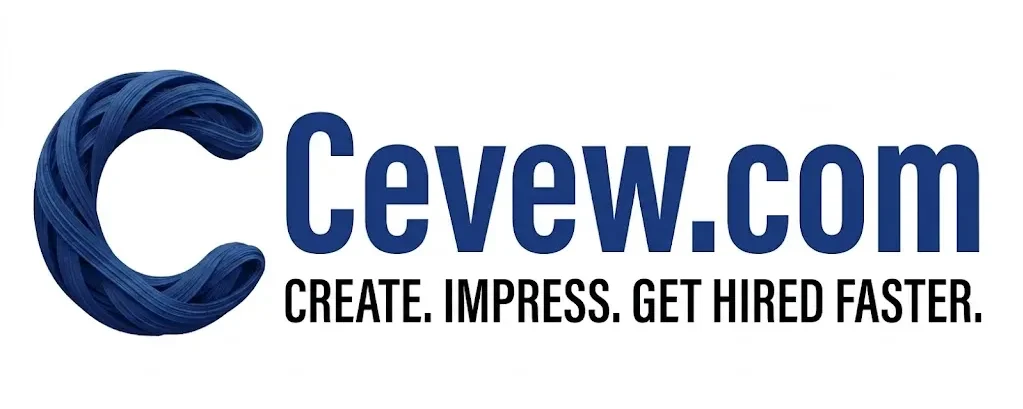
Top CV Mistakes That Get Rejected Immediately
Top CV Mistakes That Get Rejected Immediately
Sajid was a fresh graduate with good skills and strong academic results, but he kept getting rejected without interviews. He thought the problem was lack of experience, but the real issue was his CV. Small mistakes in formatting, unclear information, and poor structure were silently blocking his job applications. This happens to thousands of job seekers every day.
Understanding the Top CV Mistakes is important because employers spend only a few seconds scanning each CV. If your CV does not look professional or easy to read, it gets rejected immediately. This guide explains the most common mistakes in simple language and shows how to fix them step by step so you can improve your chances of getting hired.
What Are the Top CV Mistakes and Why Do They Matter
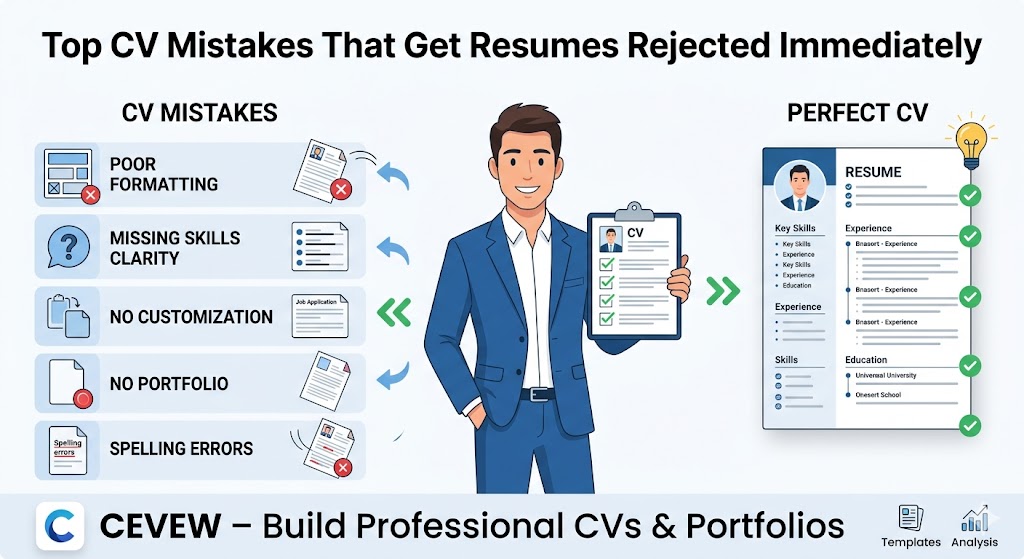
The Top CV Mistakes are errors in your resume that make recruiters lose interest quickly. These mistakes reduce your chances even if you have strong skills or experience. A CV is your first impression, and if it looks confusing or unprofessional, employers move on to the next candidate.
Common impact of mistakes includes
- Your CV gets ignored in seconds
- ATS systems reject your application
- Recruiters cannot understand your skills clearly
- You appear careless or unprepared
If you want to understand what should actually go inside a CV, you can review this guide on what to include when you create your CV which explains proper structure in detail.
What Are the Most Common CV Mistakes That Lead to Rejection
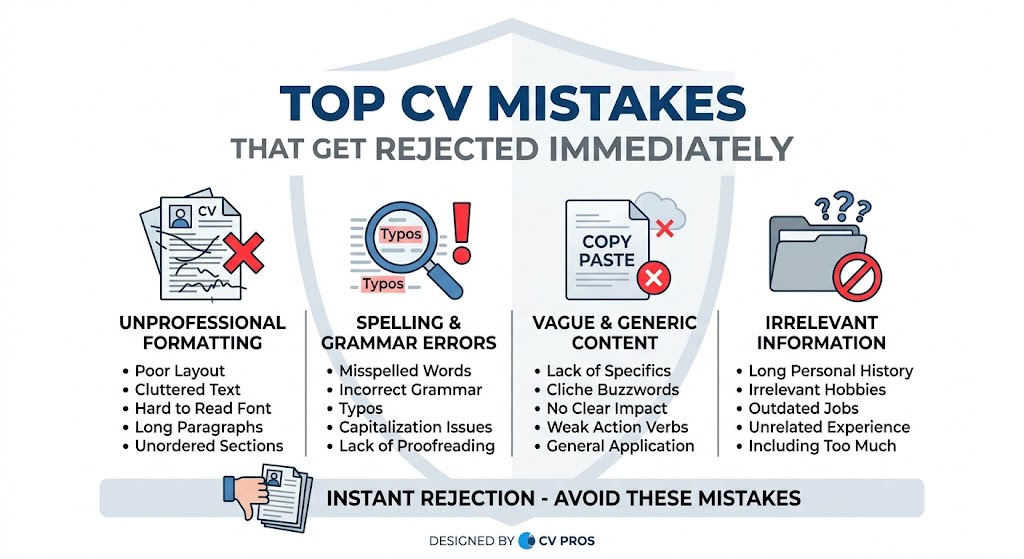
Poor Formatting and Design
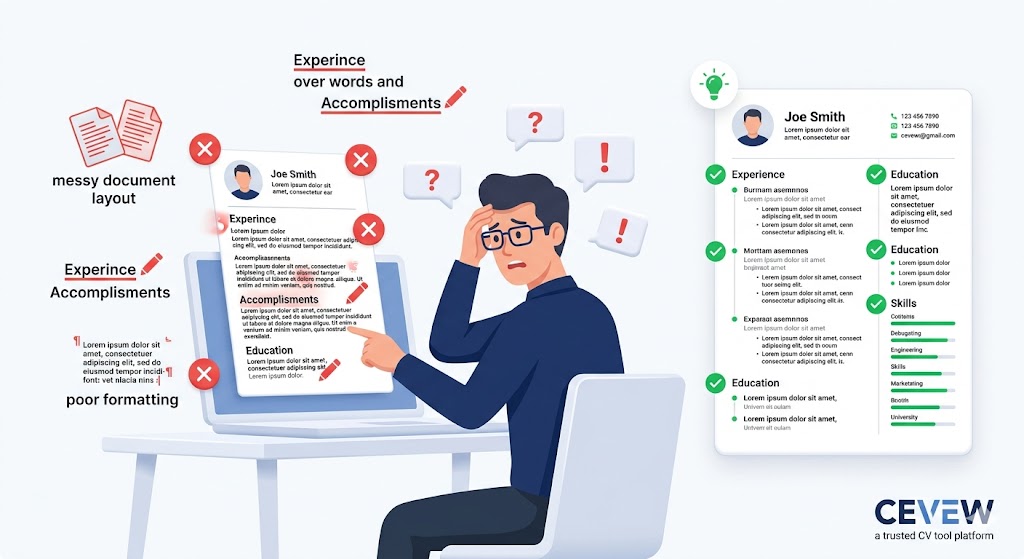
One of the biggest mistakes is using messy formatting. If your CV has inconsistent fonts, no spacing, or too many colors, it becomes hard to read. Recruiters prefer clean and simple layouts.
Key issues include
- Different font styles in one document
- No clear headings
- Too much text in one section
- Poor alignment
A good CV layout should be simple, readable, and structured.
Lack of Clear Skills and Experience
Many candidates fail to explain their skills properly. They list random abilities without showing how they used them. Employers want to see real examples.
Wrong approach
- Good communication skills
Better approach
- Handled customer queries and improved satisfaction by solving issues quickly
Using the Same CV for Every Job
Sending the same CV to every company is a major mistake. Each job has different requirements, and your CV should match those needs.
Instead
- Read the job description carefully
- Adjust your skills and experience accordingly
- Use relevant keywords
If you want to learn how to write a customized CV step by step, you can follow this guide on how to write a professional CV.
No Portfolio or Proof of Work
In today’s job market, especially for freelancers and developers, showing your work is essential. A CV without proof looks incomplete.
Add
- Portfolio links
- Project samples
- Freelancing work
How Can You Avoid These CV Mistakes
Step by Step Fix
- Keep your CV clean and simple
- Use clear headings like Skills, Experience, Education
- Add real examples instead of generic statements
- Customize your CV for each job
- Include portfolio or project links
Best Practices
- Use bullet points for easy reading
- Keep your CV 1 to 2 pages long
- Use professional language
- Avoid spelling and grammar errors
These small improvements can make a big difference in how your CV is perceived.
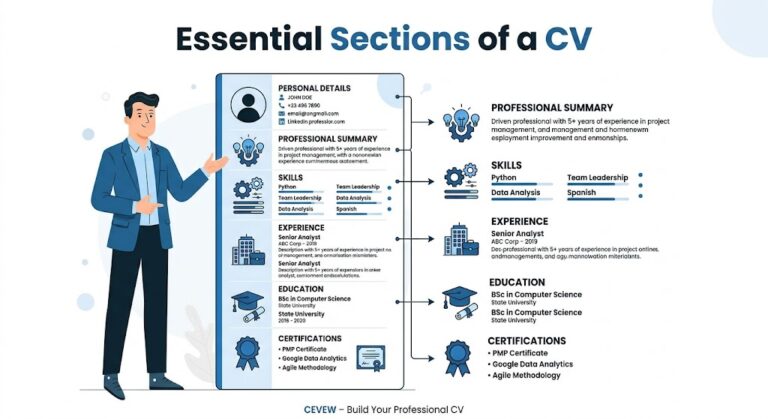
What Does a Strong CV Look Like
A strong CV is easy to read and clearly shows your value. It focuses on results and real work instead of just listing duties.
Key Components
- Professional summary
- Relevant skills
- Work experience with results
- Education details
- Portfolio or projects
To understand the best structure, you can explore the best CV format which explains layouts that get faster responses.
Real-Life Examples of CV Mistakes and Fixes
Beginner With No Experience
Problem
A beginner writes No experience and leaves the section empty.
Solution
- Add internships or small projects
- Include volunteer work
- Show skills like teamwork and communication
Example
Instead of writing nothing, mention Created a basic website using HTML and CSS as a personal project
Student Applying for First Job
Problem
A student adds too much academic detail but no practical skills.
Solution
- Focus on skills and achievements
- Add coursework related to the job
- Mention part-time work or internships
Example
Worked on a university project where I designed a simple app interface
Freelancer Building a Portfolio
Problem
A freelancer lists skills but does not show actual work.
Solution
- Add portfolio links
- Include client projects
- Show results and feedback
Example
Designed 5 websites for clients with responsive layouts and improved user experience
These examples show how small changes can turn a weak CV into a strong one.
FAQs
What is the biggest CV mistake
The biggest mistake is unclear information. If employers cannot quickly understand your skills and experience, they will reject your CV.
How long should a CV be
A CV should be 1 to 2 pages. Keep it short, clear, and focused on relevant information.
Should I include a portfolio in my CV
Yes, especially for freelancers and creative professionals. A portfolio shows real proof of your work and builds trust.
Conclusion
A clean format, clear skills, and real examples can completely change how employers see your CV. Whether you are a student, beginner, or freelancer, improving your CV is the first step toward better job opportunities. Take action today by updating your CV, adding your portfolio, and making sure every detail is clear and professional.