CV vs Resume: What Is the Difference
What Is the Difference Between CV vs Resume – Explained
The job seekers who are trying to apply for the right position but are unsure which documents employers expect. Imagine you are applying for a job online, and one company asks for a CV while another asks for a resume. Many people submit the wrong document and lose opportunities without even realizing it. This confusion is normal because both documents look similar at first, but their purpose is very different in real hiring systems.
In simple terms, both CV and resume represent your professional identity, but they serve different depth levels of information. A CV is detailed and long-form, while a resume is short and tailored. Understanding this difference, it directly impacts your chances of getting shortlisted in competitive job markets.
What does difference between CV and resume mean in real job search?
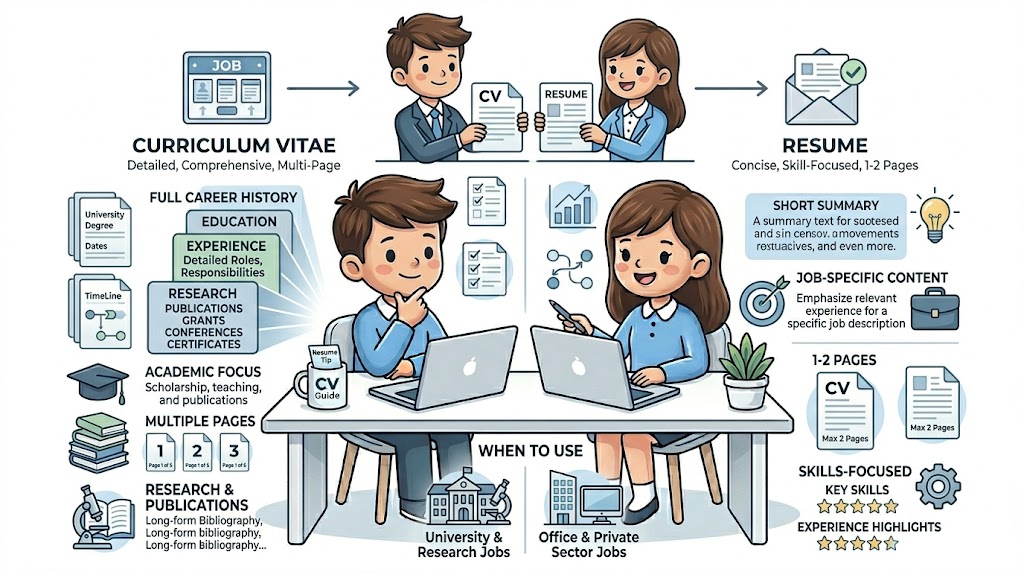
The difference between CV and resume becomes clear when you look at how employers use them during screening. A CV (Curriculum Vitae) is usually a complete record of your academic background, research, publications, certifications, and career journey. It does not change much from job to job.
On the other hand, A Resume is highly targeted. It is customized for each job application and highlights only the most relevant skills and experience.
Key distinctions include:
- CV is detailed and can be multiple pages long
- Resume is concise, usually 1–2 pages
- CV is used more in academic or research roles
- Resume is used in corporate and private-sector jobs
- CV remains mostly static, resume is updated frequently
For a deeper understanding of document structuring, you can explore how professionals format applications at blog section of CV and Resume where career-related writing patterns are explained in practical detail.
CV vs Resume comparison guide in professional hiring systems?
A CV vs resume comparison guide helps job seekers understand how recruiters evaluate applications differently based on role type. Hiring systems today often use automated screening tools before a human even sees your profile.
In this comparison model:
- CV focuses on depth of career history
- Resume focuses on job-fit relevance
- CV highlights achievements across your full timeline
- Resume highlights achievements aligned with one job role
Recruiters in universities, research institutions, and medical fields usually prefer CVs, while IT companies, startups, and corporate firms prefer resumes. This is not a strict rule, but a widely followed hiring pattern based on workload and relevance filtering.
If you want to structure your CV properly, you can follow practical writing steps at how to write a cv which explains how professionals build strong application documents.
When should you use CV or resume in different job applications?
Understanding when to use CV or resume is critical for job success because sending the wrong document can reduce your chances instantly. Think of it like wearing the right outfit for the right event; context matters.
Use a CV when:
- Applying for academic roles
- Research positions or PhD programs
- Medical or scientific careers
- International scholarship applications
Use a resume when:
- Applying for corporate jobs
- IT and software development roles
- Sales, marketing, or business roles
- Freelancing or project-based work
This distinction helps recruiters quickly evaluate your suitability without wasting time. Many applicants lose interviews simply because they ignore this basic rule.
For better career preparation strategies, you can also check blog section which covers modern job application techniques.
How are CV and resume differences explained through structure and content?
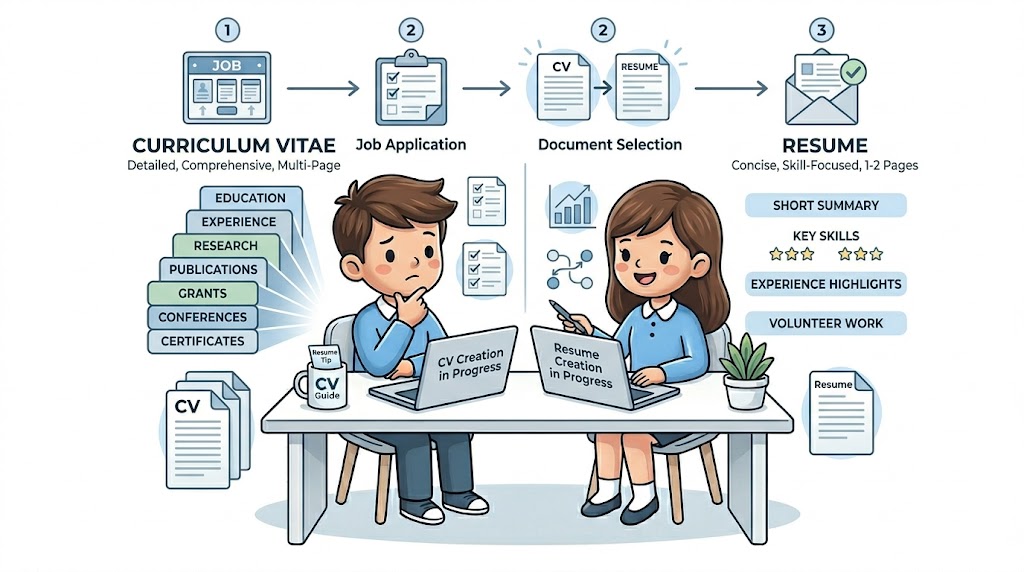
The CV and resume differences explained in hiring practice come down to structure, length, and intent. A CV is like a full biography of your professional life, while a resume is like a highlight reel.
Typical structure comparison:
CV structure:
- Personal details
- Academic background
- Research and publications
- Certifications and awards
- Work history in full detail
Resume structure:
- Contact information
- Summary statement
- Key skills
- Relevant experience
- Education (brief)
This structure difference helps employers quickly decide which document fits their hiring needs.
How does the CV vs Resume selection logic work?
A structured comparison system can be used to decide which document fits a job application. The logic behind such a system is simple and based on relevance scoring.
The selection formula can be understood as:
job_match_score = (role_type_weight × experience_relevance) + skill_alignment
If academic weight is higher, CV is recommended. If skill alignment and job relevance are higher, resume is recommended.
A simplified decision rule:
- If
role_type = academic OR research→ choose CV - If
role_type = corporate OR private sector→ choose resume
This logic helps users avoid confusion and select the correct format without guessing. You can practice structuring your own application using how to write a cv which guides document preparation in a step-by-step format.
What are real-life examples of choosing CV or resume correctly?
Example 1: Academic job application
A university lecturer applies for a teaching position.
Step 1: Check job type → academic
Step 2: Select CV format
Step 3: Include publications, research, and full education history
Result: CV increases selection chances because it matches expectations
Example 2: Software developer job
Step 1: Job type → corporate IT role
Step 2: Select resume format
Step 3: Highlight only relevant projects, coding skills, and experience
Result: Resume improves readability for recruiters
Example 3: Freelance designer
Step 1: Job type → project-based
Step 2: Choose resume
Step 3: Focus on portfolio highlights and client results
Result: Faster client response due to clear skill presentation
These examples show how understanding CV vs Resume: What Is the Difference and Which One Should You Use directly impacts job outcomes.
FAQs
What is the main difference between CV and resume?
A CV provides full career history, while a resume provides a short, targeted summary focused on a specific job role.
Can I use CV instead of resume?
Yes, but only if the job allows it. In most corporate roles, a CV may be too detailed and reduce readability.
How long should a resume be?
A resume should typically stay within 1–2 pages to maintain clarity and recruiter attention.
Conclusion
The difference between CV and Resume is that: A CV works best for detailed academic and research profiles, while a resume works best for fast, skill-focused job applications. Choosing correctly improves your visibility and increases interview chances significantly. Understanding structure, purpose, and context ensures you always send the right document for the right opportunity.