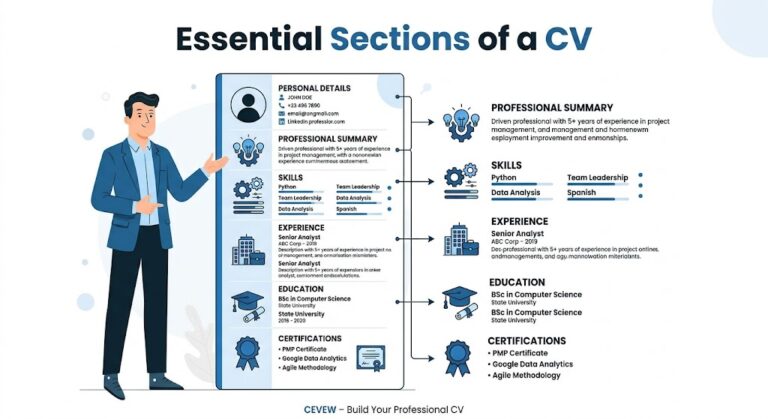
How to Build a Portfolio Website
How to Build a Portfolio Website Without Coding Skills
Many students and job seekers today struggle to show their skills in a professional way. For example, a student applying for his first internship may not have much work experience, but he still needs to prove his abilities. A freelancer also faces the same issue when clients ask for proof of work before hiring.
This is where a portfolio website becomes important. It helps you show your skills, projects, and experience in one clean online place. The good news is that you don’t need coding knowledge anymore. You can easily learn How to Build a Portfolio Website using simple tools and templates.
Today, platforms like Cevew also make it easier to create your CV and connect it with your portfolio so everything stays professional and ready for job applications.

What is a Portfolio Website and Why Do You Need One?
A portfolio website is a personal online space where you show your work, skills, and achievements. It acts like a digital resume but in a more visual and powerful way.
Unlike a normal CV, a portfolio gives proof of your skills. For example, instead of just saying I am a web designer, you can show real websites you created.
It is useful for:
- Students looking for internships
- Freelancers finding clients
- Job seekers applying for better roles
- Creatives like designers, writers, and developers
A strong portfolio increases trust because employers can see real work instead of just reading claims.
How Does a Portfolio Website Help in Career Growth?
A portfolio website works as your personal brand identity. It helps recruiters understand your abilities faster.
It improves your chances in:
- Job applications
- Freelancing platforms
- Remote work opportunities
- Professional networking
For example, a recruiter checking two candidates will prefer the one who shows real projects instead of just a simple resume. This is why understanding How to Build a Portfolio Website is becoming essential in modern career building.
What Are the Main Sections of a Portfolio Website?
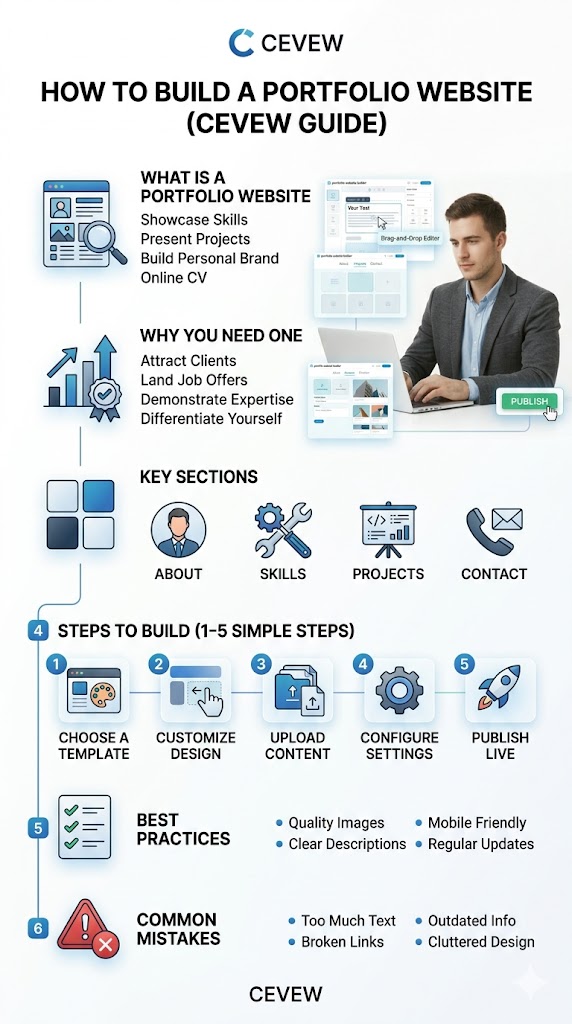
A good portfolio website is simple but structured. It should include clear sections that guide visitors easily.
1. About Me Section
This section introduces you in a short and clear way. It includes your background, skills, and goals.
2. Skills Section
List your key skills in a simple format. For guidance, you can also learn how professionals present abilities through resources like create your CV online.
3. Projects Section
This is the most important part. Show real work like:
- Websites
- Designs
- Writing samples
- Freelance work
4. Contact Section
Add email, social links, or a contact form so people can reach you easily.
How Can You Build a Portfolio Website Without Coding?
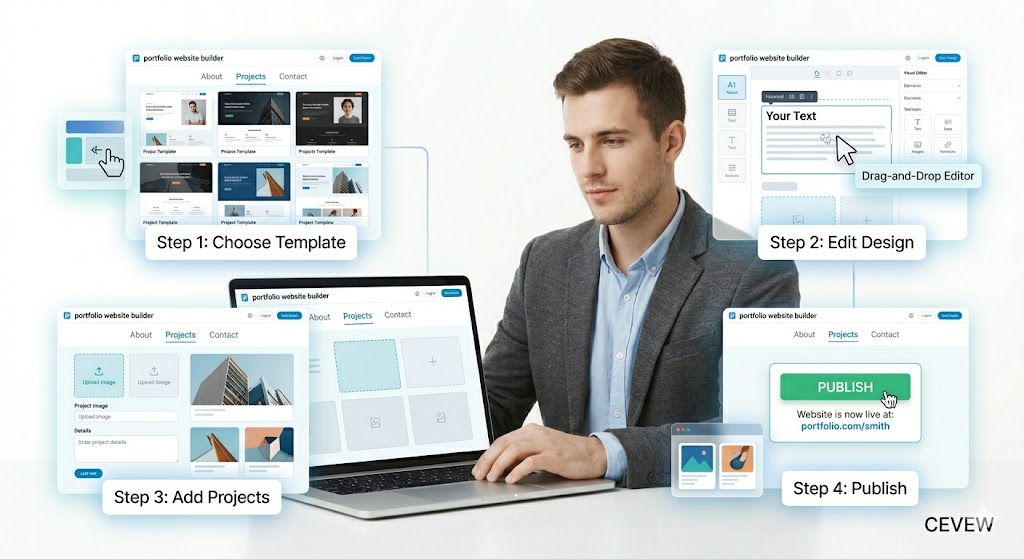
Today, building a portfolio is simple because of no-code tools. You just need to follow a step-by-step process.
Step-by-step method:
- Choose a portfolio builder platform
- Select a ready-made template
- Add your personal details
- Upload your work or projects
- Customize colors and layout
- Publish your website
Even beginners can complete this in a few hours. You do not need programming or design skills.
If you want an easier experience, you can also explore a portfolio maker that automatically builds structure for you.
What Are the Best Practices for a Strong Portfolio Website?
A professional portfolio is not about quantity, it is about quality.
Follow these practices:
- Keep design simple and clean
- Use real projects only
- Write short and clear descriptions
- Avoid unnecessary animations
- Keep navigation easy
For example, a freelancer should only show 5 strong projects instead of 20 weak ones.
What Are Common Mistakes to Avoid?
Many beginners make mistakes that reduce their chances of getting jobs or clients.
Avoid:
- Adding too much text
- Using unclear images
- Missing contact details
- Copying others’ work
- Overloading design elements
A portfolio should feel professional and easy to understand within 10 seconds of viewing.
Real-World Examples of Portfolio Websites
Example 1: Student with No Experience
A student creates a portfolio showing university assignments, small projects, and learning journey. Even without job experience, it shows effort and skills.
Example 2: First Job Applicant
A beginner applying for a marketing job includes sample campaigns, social media posts, and a short professional summary. This helps recruiters understand capability.
Example 3: Freelancer Building Clients
A freelancer shows client projects, before-and-after work samples, and testimonials. This builds trust and increases chances of getting paid projects.
These examples show that How to Build a Portfolio Website is not about experience, but about presentation.
How Does Portfolio Connect with Resume and CV?
A portfolio and resume work together. A resume gives summary, while a portfolio gives proof.
For better results:
- Use resume for applications
- Use portfolio for showcasing work
You can also improve your job profile by learning how to write a professional summary for your resume to make your introduction stronger.
FAQs
1. Do I need coding skills to build a portfolio website?
No. Modern tools allow you to build a full portfolio without coding.
2. What should I include in my portfolio?
You should include skills, projects, experience, and contact information.
3. Is a portfolio necessary for all jobs?
It is not mandatory for all jobs, but it is highly useful for creative, technical, and freelance roles.
Conclusion
A portfolio website is one of the most powerful tools for career growth today. It helps you show your real skills, build trust, and stand out from other candidates. Learning How to Build a Portfolio Website without coding makes it even more accessible for students, freelancers, and job seekers.
Start simple, focus on real work, and keep it professional. Over time, your portfolio will become your strongest career asset.