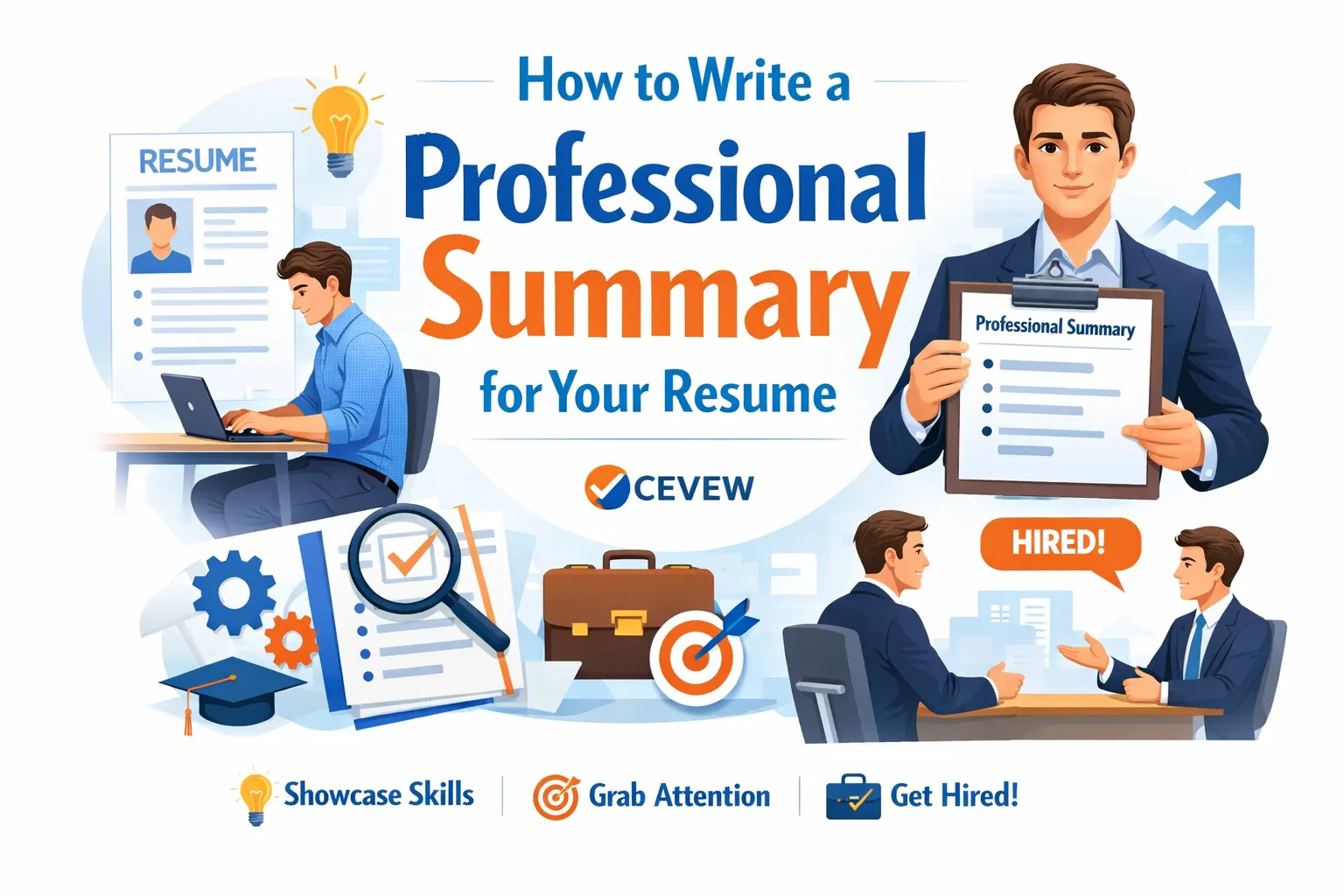
How to Write a Professional Summary for Your Resume
How to Write a Professional Summary for Your Resume – Explained
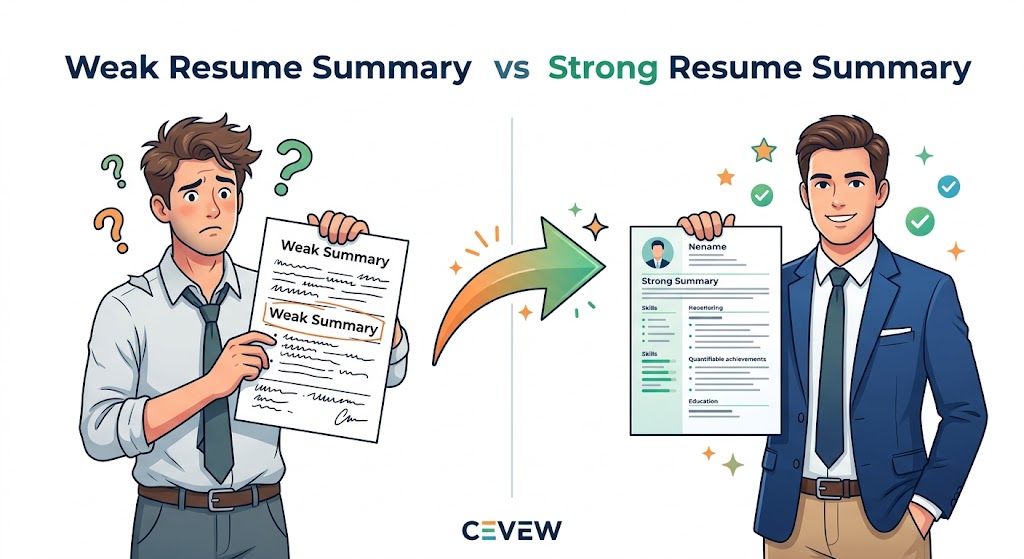
A few seconds is all it takes for a recruiter to decide whether they will read your resume or move on. Imagine a fresh graduate applying for a marketing job. He has skills, internships, and basic experience, but his resume summary is weak and unclear. As a result, his application gets ignored even before reaching the interview stage.
This is a very common problem in job applications today. Many people focus on education and experience but forget that the professional summary is the first thing hiring managers read. It works like a quick introduction that tells who you are and what value you bring.
Learning How to Write a Professional Summary for Your Resume is important because it sets the tone for your entire CV. A strong summary can instantly improve your chances of getting shortlisted, even if your experience is limited.
What Is a Professional Summary and Why Does It Matter?
A professional summary is a short paragraph placed at the top of your resume. It describes your skills, experience, and career goals in a simple and powerful way.
It matters because:
- Recruiters scan resumes quickly, often in less than 10 seconds
- It highlights your strongest abilities immediately
- It creates a first impression of your professional identity
- It helps match your profile with the job role faster
Think of it as your personal introduction before the interview even starts.
What Should You Include in a Strong Resume Summary?
When learning How to Write a Professional Summary for Your Resume, focus on clarity and relevance. A strong summary usually includes:
- Your professional title or role
- Years of experience (if any)
- Key skills relevant to the job
- Achievements or strengths
- Career goal or value you bring
Simple structure example:
- Who you are
- What you do best
- What value you offer
Avoid long sentences or unnecessary details. Keep it short and direct.
How to Write a Professional Summary for Your Resume Step by Step
Writing a strong summary becomes easy when you follow a simple method.
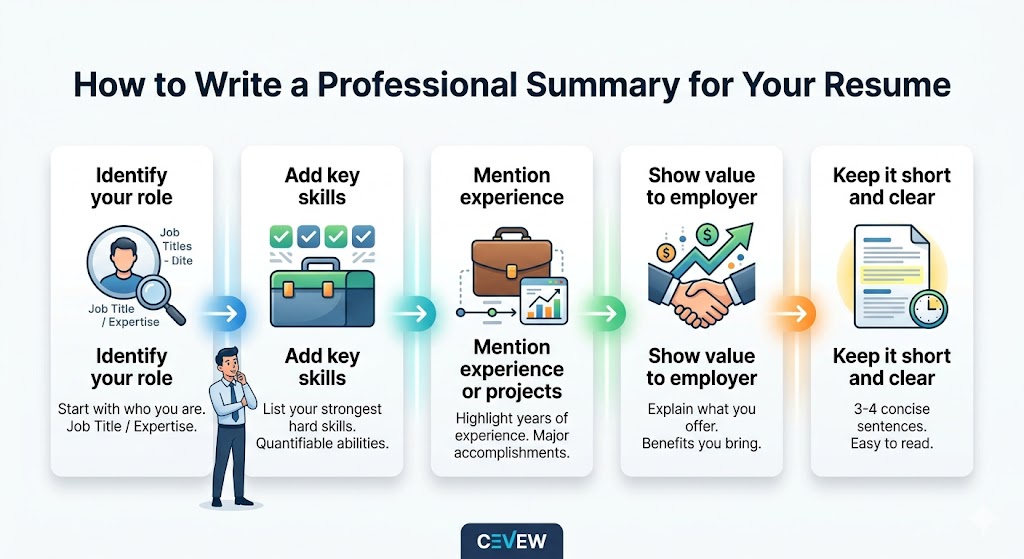
Step 1: Identify your role
Decide how you want to present yourself (e.g., web developer, student, freelancer).
Step 2: Add key skills
Focus only on skills relevant to the job.
Step 3: Mention experience level
Even if you have no experience, mention internships or projects.
Step 4: Add value statement
Explain how you can help the company or client.
Step 5: Keep it short
Aim for 3 to 5 lines maximum.
A clear structure improves readability and makes your profile look professional.
What Are the Best Practices and Common Mistakes?
Best practices:
- Use strong action words like developed, managed, created
- Tailor your summary for each job application
- Keep it job-specific
- Focus on achievements instead of duties
Common mistakes:
- Writing long paragraphs
- Using generic sentences like “hard-working person”
- Adding unrelated skills
- Copy-pasting the same summary everywhere
A good summary is always customized, not copied.
Real-World Examples of Professional Summaries
Example 1: Student with no experience
A student applying for an entry-level job should focus on skills and learning ability.
Example:
A motivated computer science student with strong skills in web development and problem-solving. Familiar with HTML, CSS, and JavaScript. Eager to apply academic knowledge in real-world projects and grow in a professional environment.
This works because it shows potential even without experience.
Example 2: Fresher applying for first job
A fresher should highlight internships and training.
Example:
Detail-oriented graduate with internship experience in digital marketing. Skilled in SEO, content writing, and social media management. Looking to contribute creative ideas and improve brand visibility.
This makes the candidate look job-ready.
Example 3: Freelancer building a portfolio
Freelancers must show results and client focus.
Example:
Experienced freelance web developer specializing in responsive websites and landing pages. Delivered multiple client projects with focus on performance and user experience. Passionate about building modern digital solutions.
How a Strong Summary Improves Your CV Layout and Design
Your resume is not only about content but also presentation. A clear summary improves overall CV structure and makes the document more readable.
A well-structured CV:
- Helps recruiters understand your profile instantly
- Improves chances of interview selection
- Creates a professional image
You can also improve your layout by using a proper CV design approach explained in this best CV format guide to ensure your resume looks clean and modern.
How Professional Summary Connects with Your Career Growth
A strong summary is not just for jobs. It also supports freelancing, internships, and portfolio building.
It helps you:
- Build confidence in job applications
- Create a strong LinkedIn profile
- Improve freelance proposals
- Highlight skills in a portfolio maker platform
Your summary becomes your personal branding statement across platforms.
Frequently Asked Questions
1. How long should a resume summary be?
A resume summary should be 3 to 5 lines. It must be short, clear, and focused only on your strongest skills and experience.
2. Can I write a summary without experience?
Yes, you can. Focus on education, skills, internships, and projects. Employers value potential and learning ability.
3. Should I change my summary for every job?
Yes, it is recommended. A customized summary improves your chances because it matches the specific job role.
Conclusion
A professional summary is one of the most important parts of your resume. It creates the first impression and helps recruiters quickly understand your value. When you learn How to Write a Professional Summary for Your Resume, you improve your chances of getting noticed, even in a competitive job market.
Focus on clarity, relevance, and real skills. Keep it short and always match it with the job you are applying for. A strong summary can turn an average CV into a powerful career tool.