What to Include in a CV: Every Section Explained
What to Include in a CV: Every Section Explained
A CV is often the first impression between you and a job opportunity. Many people lose chances not because they lack skills, but because they don’t know how to present them properly.
Imagine a student applying for their first internship. They are talented, but their CV is messy and missing key sections like skills and education details. The recruiter quickly skips it. This happens more often than people realize. A well-structured CV increases your chances of getting interviews and job calls.
What Is the Purpose of a CV and Why Does It Matter?
A CV is a professional document that summarizes your education, skills, and experience. Its main purpose is to show employers why you are suitable for a job.
A strong CV does three important things:
- Shows your skills clearly
- Highlights your achievements
- Makes recruiters trust your profile quickly
When you understand CV structure properly, you avoid confusion and build a document that speaks for you even before an interview starts.
What Are the Essential Sections in a CV?
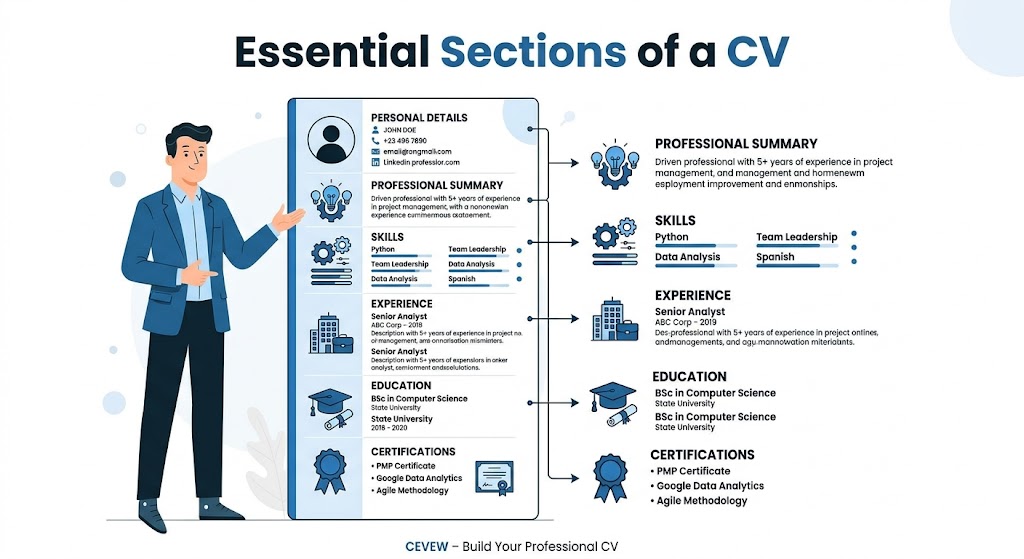
Every CV must include specific sections to be complete and professional.
1. Personal Details
Include:
- Full name
- Phone number
- Email address
- Location (optional)
Keep it simple and professional.
2. Professional Summary
A short paragraph explaining:
- Who you are
- Your key skills
- Your career goal
3. Education
Mention:
- Degree or qualification
- Institute name
- Year of completion
4. Skills Section
Add relevant skills like:
- Communication
- Technical skills
- Software knowledge
5. Work Experience
Include:
- Job title
- Company name
- Responsibilities
6. Certifications and Achievements
Show any extra courses or awards.
A clear CV content checklist ensures you never miss these important parts.
How Should You Structure a CV Professionally?
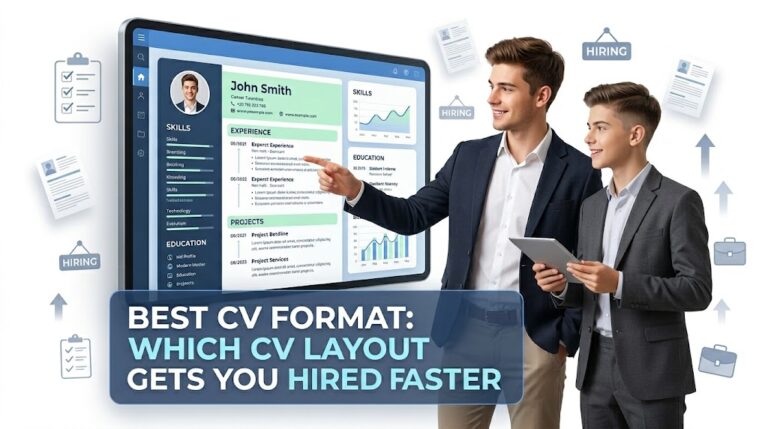
A proper CV structure guide helps recruiters read your profile easily. The order matters more than people think.
Recommended order:
- Personal Details
- Summary
- Skills
- Experience
- Education
- Certifications
Keep formatting clean and consistent:
- Use simple fonts
- Avoid long paragraphs
- Keep spacing balanced
- Use bullet points for clarity
A well-structured CV feels easier to read and more professional.
What Are Common CV Writing Mistakes People Make?
Many candidates lose opportunities because of avoidable mistakes.
Common mistakes include:
- Adding unnecessary personal information
- Writing long paragraphs instead of bullet points
- Using unprofessional email addresses
- Ignoring skills section
- Copying CVs without customization
Even a small mistake can reduce your chances of getting selected. Recruiters usually spend only a few seconds scanning each CV.
Real-World Examples of CV Building
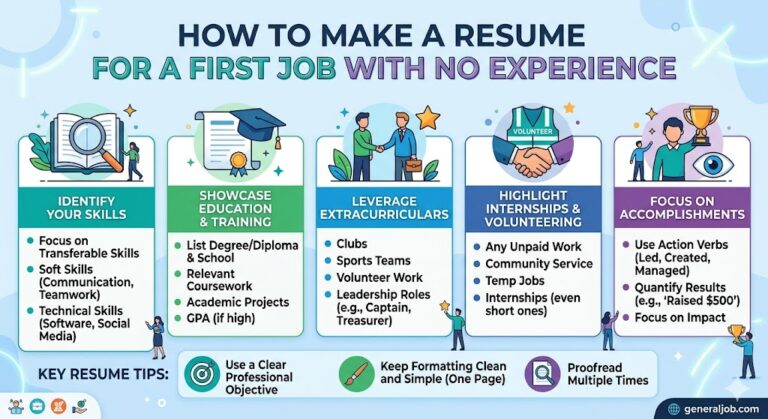
Example 1: Student with No Experience
A student applying for an internship focuses on:
- Education section
- Academic projects
- Skills like MS Word or Excel
Even without experience, a clear structure makes the CV strong.
Example 2: First Job Applicant
A beginner adds:
- Internship experience
- Basic skills
- Short professional summary
This shows readiness for entry-level jobs.
Example 3: Freelancer Building Portfolio
A freelancer highlights:
- Client projects
- Tools used (like Ahmad Free Tools or Canva)
- Portfolio examples of work
For freelancers, CV and portfolio work together to build trust.
If you want to present your work better, you can also explore tools like create your CV online to build a clean and structured CV easily.
How Can a CV Improve Your Job Application Success?
A strong CV directly improves your job application results. Recruiters prefer candidates who present their skills clearly and professionally.
A good CV helps you:
- Stand out from other applicants
- Show confidence in your abilities
- Increase interview chances
When your CV is structured properly, it communicates value instantly without extra explanation.
Why Is a CV Important for Freelancers and Professionals?
Freelancers often underestimate CV importance. But clients still want proof of skills.
A CV helps freelancers:
- Build trust with clients
- Show past work experience
- Present skills in a professional way
Even in freelancing platforms, a structured CV improves your profile visibility.
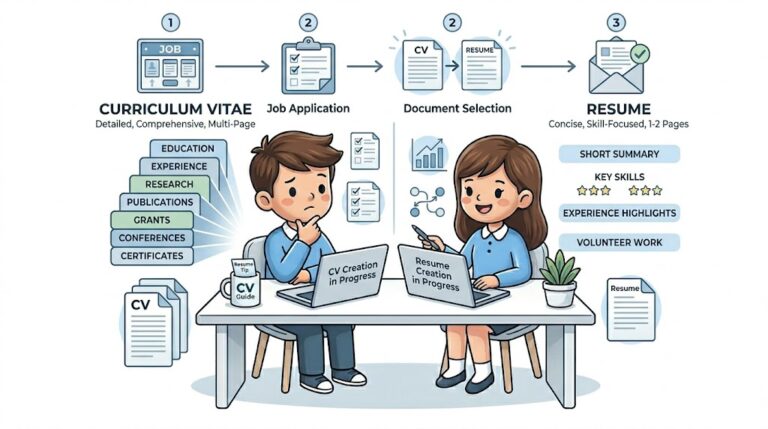
If you want deeper understanding, you can also read CV vs Resume differences to know when to use each format correctly.
FAQs
1. What should a beginner include in a CV?
A beginner should include education, skills, a short summary, and any small projects or internships.
2. How long should a CV be?
A CV should usually be 1 to 2 pages. Keep it short and relevant.
3. Can I make a CV without experience?
Yes. Focus on skills, education, and personal projects instead of work experience.
Conclusion
CV is your personal marketing tool. When you include the right sections like skills, education, and experience, your chances of getting selected increase significantly. Keep it simple, clear, and tailored for each job.
Start improving your CV today and present your skills in a way that gets noticed.