How to Explain Employment Gaps on a CV Without Lying
How to Explain Employment Gaps on a CV Without Lying
Many job seekers face a common problem. You open your CV, look at your work history, and notice a gap. Maybe you took time off after studies, lost a job, handled family responsibilities, or tried freelancing but did not list it. Now you worry: will employers reject you?
This is where understanding How to Explain Employment Gaps on a CV becomes important. The truth is simple. Employers do not reject gaps. They reject unclear or suspicious explanations. If you explain your gap honestly and smartly, it can even build trust.
This guide will help you explain your employment gaps clearly, professionally, and without lying.
What Are Employment Gaps and Why Do Employers Care?
An employment gap is any period where you were not working in a formal job. This could be weeks, months, or even years.
Why employers notice gaps
Employers check gaps because they want to understand:
- If your skills are still relevant
- If you were doing something productive
- If there is any risk in hiring you
Common reasons for employment gaps
- Studies or further education
- Freelancing or personal projects
- Health or family responsibilities
- Job searching after layoffs
- Career change or learning new skills
A gap is not a problem. The problem is when it is unexplained.
How to Explain Employment Gaps on a CV Clearly and Honestly?
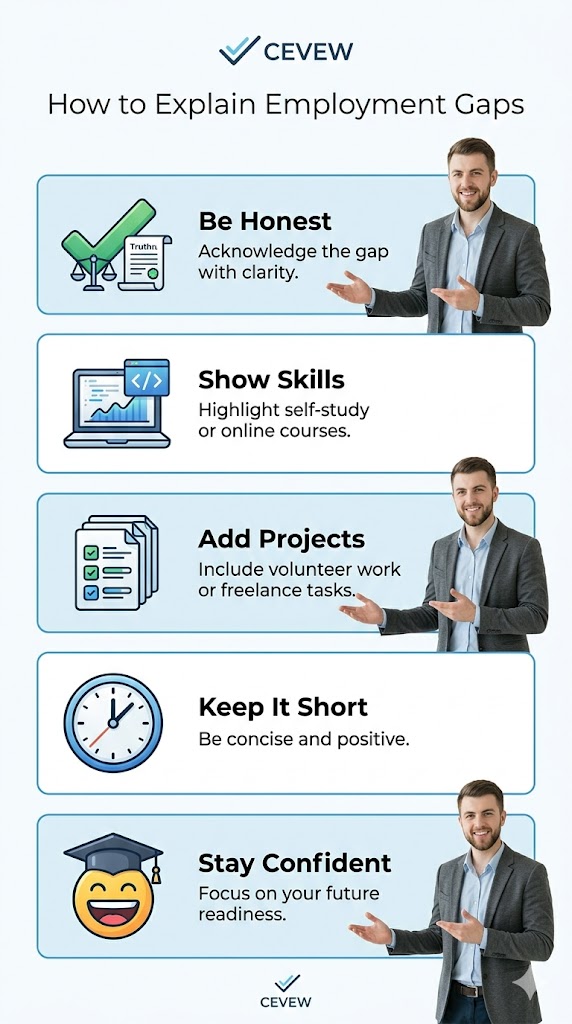
The best way to handle gaps is to be honest, simple, and positive.
1. Be honest but not overly detailed
You do not need to write your life story. Just explain the gap briefly.
Example
2022 – 2023: Took time to care for a family member and completed online courses in digital marketing.
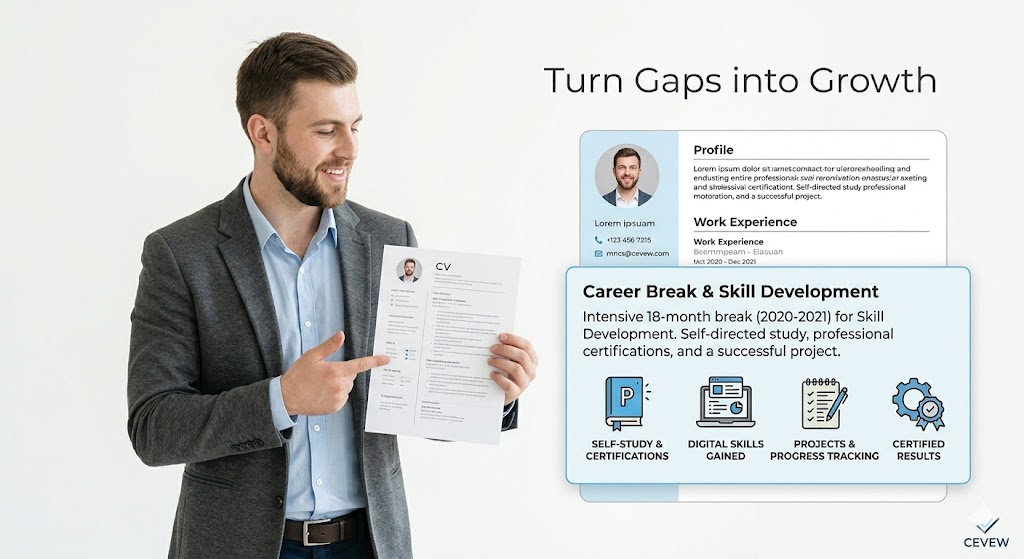
2. Focus on what you did during the gap
Even if you were not employed, you likely did something valuable.
- Learned new skills
- Took online courses
- Did freelance work
- Built a portfolio
- Volunteered
This shows growth instead of inactivity.
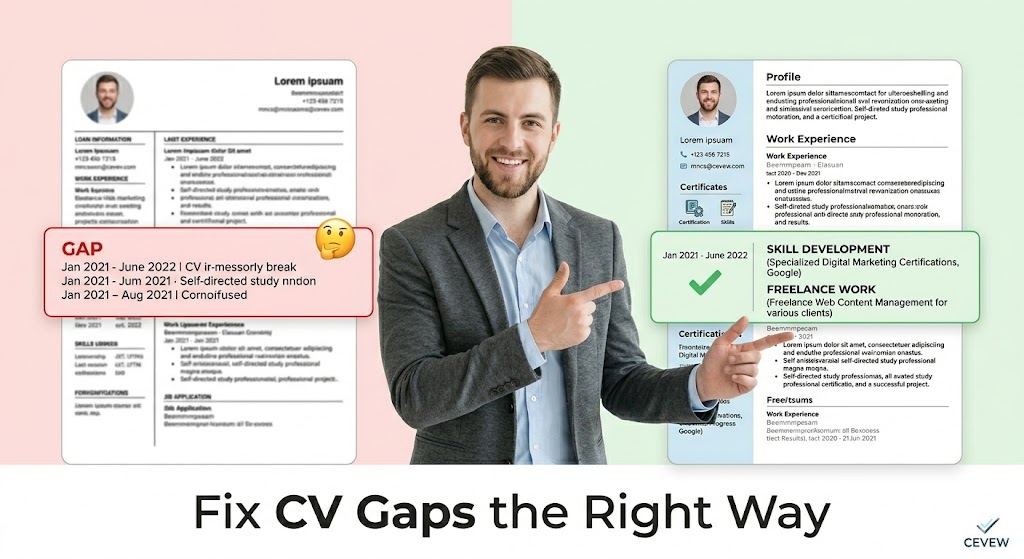
3. Use a functional or hybrid CV format
If you have gaps, focus more on skills and achievements instead of timeline.
If you want help structuring it properly, you can create your CV online where a team builds your CV and portfolio professionally.
4. Keep explanations short and confident
Avoid emotional or negative language.
Wrong
I was struggling to find a job and had many problems.
Right
Focused on skill development and completed certifications in web development.
What Is the Best Way to Format Employment Gaps on a CV?
Formatting plays a big role in how your CV looks.
Use years instead of months
Instead of writing exact months, use years to reduce attention on gaps.
Example
2022 – 2023 instead of Jan 2022 – Aug 2023
Add productive labels
You can label your gap as:
- Career Break
- Professional Development
- Freelance Projects
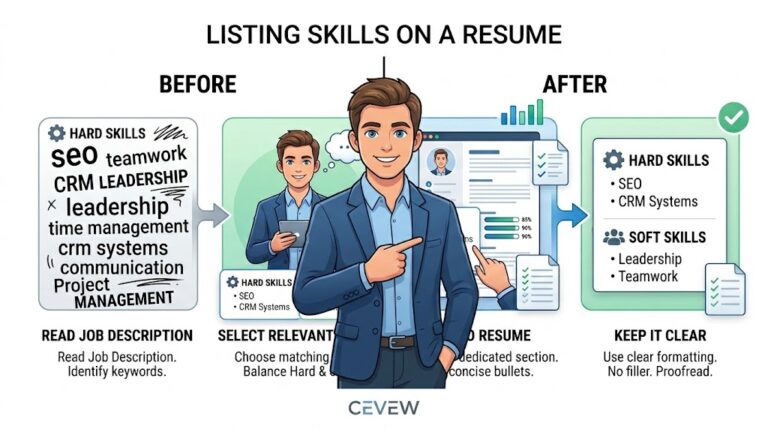
Highlight skills instead of gaps
Focus on sections like:
- Skills
- Projects
- Certifications
You can learn how to structure education sections properly in cv.
What Mistakes Should You Avoid When Explaining Employment Gaps?
Many people make simple mistakes that hurt their chances.
Common mistakes
- Lying about experience
- Hiding gaps completely
- Giving long emotional explanations
- Leaving gaps unexplained
- Using negative words
Why lying is risky
Employers often verify information. If they find inconsistencies, it damages trust immediately. A better approach is clarity and honesty, you can also read common CV errors to improve your CV.
How Can You Turn Employment Gaps into Strength?
A gap can actually become your advantage if handled correctly.
Show learning and growth
Example
Completed 5 online courses in SEO and content writing during career break.
Build a portfolio
If you worked on personal or freelance projects, show them.
Show real-world skills
Skills like communication, problem-solving, and time management matter a lot.
Real-Life Examples of Explaining Employment Gaps
Example 1: Beginner with no experience
Situation
A student finished studies but did not get a job for 1 year.
Solution
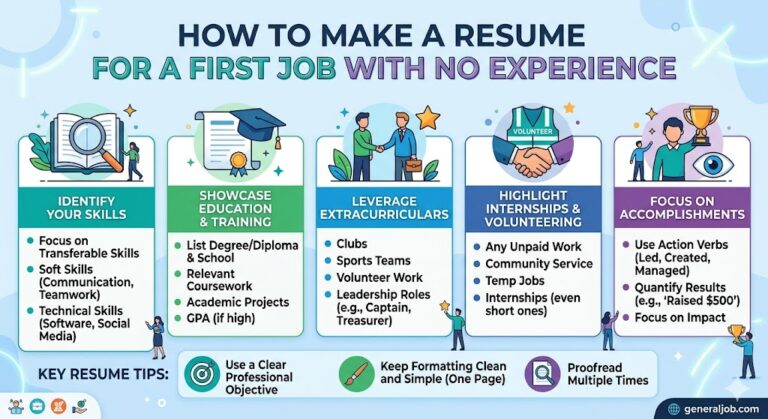
- Add section: Skill Development
- Mention courses, projects, internships
CV Line
2023 – 2024: Focused on learning graphic design and completed 10+ design projects.
Example 2: Student applying for first job
Situation
Gap after graduation.
Solution
- Show internships
- Add volunteer work
CV Line
2022 – 2023: Completed internship and volunteer teaching experience.
Example 3: Freelancer building portfolio
Situation
Worked independently without formal job.
Solution
- Add Freelance Work section
- Show projects and results
CV Line
2021 – 2023: Freelance web developer, worked with 15+ clients globally.
This makes your gap look like real experience.
How to Confidently Explain Employment Gaps in Interviews?
Your CV is only step one. Interviews matter too.
Tips for interviews
- Be direct and calm
- Focus on what you learned
- Avoid blaming others
- Show readiness to work
Example answer
I took a break to improve my skills and completed several practical projects. Now I am ready to apply them in a professional role.
FAQs
1. Is it okay to have employment gaps on a CV?
Yes, it is completely normal. Many people have gaps due to study, health, or career change. What matters is how you explain them.
2. Should I hide employment gaps?
No. Hiding gaps creates confusion. It is better to explain them briefly and honestly.
3. How long of a gap is acceptable?
There is no fixed rule. Even long gaps are acceptable if you show learning, skills, or productive activities during that time.
Conclusion
Understanding How to Explain Employment Gaps on a CV is not about hiding the truth. It is about presenting your journey clearly and professionally. Employers value honesty, growth, and effort. Even if you were not working, you were still learning, improving, or handling real-life responsibilities. Focus on what you gained during that time. Keep your explanation short, positive, and skill-focused.