How to Write a Cover Letter That Gets Interviews
How to Write a Cover Letter That Gets Interviews
Imagine a student named Asad who applied to 20 jobs but never got a reply. His resume was fine, but he skipped the cover letter. When he finally wrote a strong one, he started getting interview calls. This shows the real power of a good cover letter. A cover letter is a short document that explains who you are, what you can do, and why you are the right person for the job. It connects your skills and experience directly to the company’s needs. If you understand How to Write a Cover Letter, you increase your chances of standing out in a crowded job market.
How to write a cover letter that gets interviews step by step
Writing a strong cover letter is not complicated if you follow a clear process.
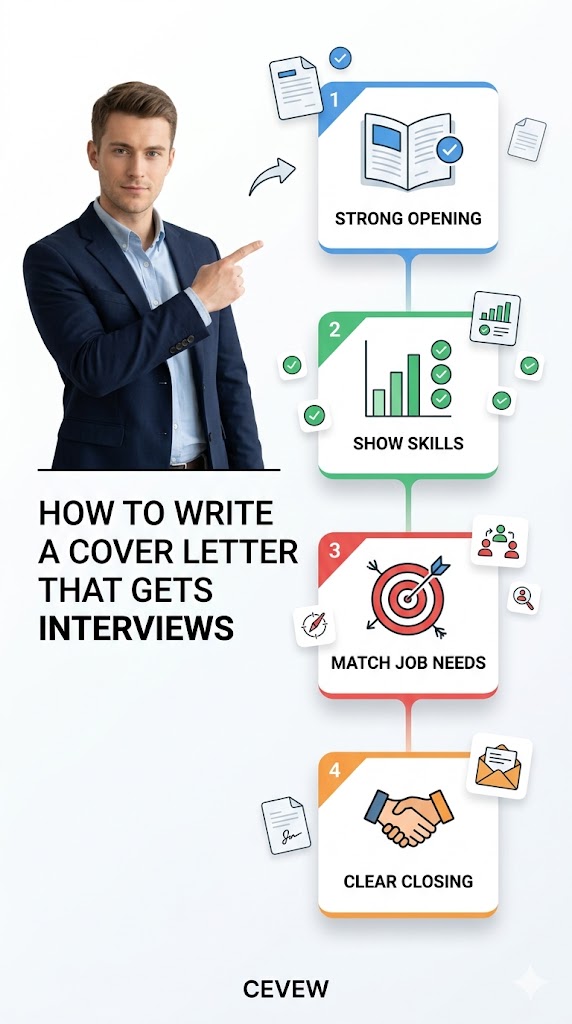
Step 1: Start with a strong opening
Begin with a direct and confident sentence. Mention the job role and show interest in the company. Avoid generic lines. Example: I am applying for the Marketing Assistant role and I am excited to contribute my content writing and SEO skills.
Step 2: Show relevant skills and experience
Focus only on skills that match the job. Use simple examples from your past work, studies, or freelancing.
Step 3: Explain why you are a good fit
Tell the employer how your work can solve their problems. This is where most people fail.
Step 4: End with a clear call to action
Politely ask for an interview and thank them for their time.
If you already have a resume, you can easily connect it which helps you maintain consistency between your resume and cover letter.

What are the key parts of a professional cover letter
A complete cover letter has clear sections. Each section plays an important role.
1. Header
Include your name, email, and phone number. Keep it clean and simple.
2. Greeting
Use the hiring manager’s name if possible. If not, use Dear Hiring Manager.
3. Introduction
Mention the job title and why you are applying. Keep it short but strong.
4. Body paragraph
Explain your skills, experience, and achievements. Use real examples instead of general claims.
5. Closing paragraph
Show confidence and ask for the next step.
6. Signature
End with your name and a polite closing like Sincerely.
If you want to improve your full job profile, you should also read a portfolio guide to understand how professionals present their work effectively.
What are the best practices to make your cover letter stand out
To truly learn How to Write a Cover Letter, you need to follow proven practices.
- Always customize your cover letter for each job
- Use simple and clear language
- Focus on results instead of duties
- Keep it one page only
- Match your tone with the company culture
A strong cover letter does not fill up with fancy words. It is about clear communication. Even a simple sentence like I helped increase website traffic through SEO strategies is more powerful than long, unclear writing.
What common mistakes should you avoid in a cover letter
Many job seekers lose opportunities because of small mistakes.
- Writing the same cover letter for every job
- Repeating the resume without adding value
- Using complex or robotic language
- Ignoring formatting and structure
- Not proofreading for errors
Avoiding these mistakes alone can improve your chances of getting interviews. You can also improve your application by using a portfolio maker to showcase your real work alongside your cover letter.
How should you format a cover letter for better results
Formatting makes your cover letter easy to read and professional.
- Use a simple font like Arial or Calibri
- Keep font size between 10 and 12
- Maintain proper spacing between paragraphs
- Align text to the left
- Use short paragraphs for readability
A well-formatted cover letter shows attention to detail, which employers value in any job application.
Real examples of writing a cover letter for different situations
Example 1: Beginner with no experience
A beginner can focus on skills learned in school or online courses. For example, if you completed a digital marketing course, mention how you practiced SEO or social media management. Show willingness to learn and grow.
Example 2: Student applying for first job
A student can highlight academic projects and teamwork. For example, I worked on a group project where we created a marketing plan and improved engagement.”This shows practical understanding even without job experience.
Example 3: Freelancer building a portfolio
A freelancer should focus on real client work. Mention projects, results, and client satisfaction. For example, I helped a small business improve its website ranking through SEO strategies. This builds trust and authority.
How does a cover letter support your resume and portfolio
A cover letter acts like a bridge between your resume and your portfolio. Your resume lists your skills and experience, while your cover letter explains them in a story format. Your portfolio shows proof of your work. When all three are aligned, your job application becomes strong and convincing.
FAQs about writing a cover letter
How long should a cover letter be
A cover letter should be one page long. Keep it short, clear, and focused on important points only.
Should I write a new cover letter for every job
Yes, always customize your cover letter for each job. This shows effort and increases your chances of getting noticed.
Can I use the same format for every cover letter
Yes, the format can stay the same, but the content should change based on the job role and company.
Conclusion
A strong cover letter can change your job search results completely. It helps you explain your value, connect your skills to the job, and show your personality. If you follow the steps, avoid common mistakes, and use real examples, you can easily master Writing a Cover Letter. Start today by improving your resume, building your portfolio, and writing a cover letter that clearly shows what you can offer.